

Improving Our Nursing Homes Through Community Engagement
August 31, 2013 by Viki Kind
Filed under Uncategorized
An article from Hayes Rowan about improving the nursing homes.
Reclaiming Our Heritage
In his quixotic campaign to save Cleveland’s John Marshall High School from demolition, a dedicated soul (forgive me please for mentioning him) declaimed “The right of the community to hold onto its heritage is a basic one.”
Landmark buildings are good. Our greatest legacy though is in the nursing homes (or hopefully in their own homes) – our elders, who taught us to tie our shoes, cheered us when we sang the blues, made us breakfast lunch and dinner years through and through; who know us often better than we know ourselves, and that’s true.
There are many ways of turning the nursing homes, our living heritage, into centers of civic activity – meeting places for block clubs, scout troops, library reading circles, leagues of women voters.
For that heritage, and our right to hold onto it, is imperiled.
A few years ago, Clevelander Steve Piskor had to put a video camera in his mother’s room at our county’s nursing home to uncover the abuses she was enduring.([1]) Raised her son right, and lucky she did.
A study in an Atlanta GA nursing home, cited in the June ’06 Ladies Home Journal, found nearly half the residents had been punched, kicked, or choked.
We can and really must build new bridges between nursing homes and neighborhoods – bring movies in to enjoy with the residents; hold sewing bees with them, helping them mend their favorite clothes. Create indoor gardens, and outdoor. Those of you with affectionate dogs – a great opportunity for truly meaningful engagement with your community.
Attention: families who protest abuses often find themselves barred from even visiting their loved ones. Patricia McGinnis, California Advocates for Nursing Home Reform: “We’re seeing more retaliation like this than ever before against families who try to protect their parents.”
For some long-term residents – especially those without strong family ties – it can be a form of imprisonment, as Mike Bright told a Texas jury recently. Walk some halls and you will see the truth of his words.
MacArthur Fellow Marie Connolly says abused elders receive little or no protection from any system or agency. It may be one reason she resigned from justice department, DOJ.
Many of you know the poster in the 2nd Police District lobby, circulated years ago by our county’s Adult Protective Services. It portrays the photograph of an elderly woman in a picture frame; the glass is shattered.
The caption proclaims: “THE ABUSE NO ONE TALKS ABOUT”.
What to do? Jesus told us, “Visit the sick.”
Your mission … should you choose to accept.
Improving Our Nursing Homes
hayesrowan@gmail.com
Published in Acorn Press, Ridgefield, CT.
“What to look for during your annual visit to elderly relatives” by Mary Twomey MSW. Thanks, Mary and the Center of Excellence in Elder Abuse and Neglect
November 5, 2012 by Viki Kind
Filed under Uncategorized
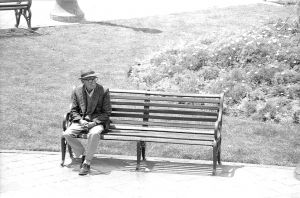
Special thanks to Mary Twomey, MSW, Co-Director, Center of Excellence in Elder Abuse & Neglect for this wonderful article.
For many of us, the holidays offer a once-a-year time to visit with elderly relatives who live at a distance. These holiday visits are a good time to assess what assistance parents or other elderly loved ones might need. There are many things to consider. Does an elderly loved one require help with chores or housekeeping, personal care, shopping and meal preparation, money management, transportation, medical checkups, or medications? Are they isolated or, do they live with others? If living with another, are they dependent on that person for care? Is that person an appropriate caregiver? During your visit, keep an eye out for warning signs of self-neglect, or abuse or neglect by others. If, before you make your trip, you suspect that your loved one needs extra assistance, plan a longer stay so that you can visit local aging service organizations during regular work hours. Allow enough time during your visit to accomplish necessary tasks.
Make the most of your visits by taking some private time with the elder to discuss future planning. Allow time for them to express anxieties. You can decide together what needs to be done and who can help. Be observant while you are visiting. Realize that you may need to arrange a visit to a doctor for a full evaluation.
Remember that 75-90% of elder abuse is committed by family members. Don’t let denial become an obstacle to planning that could prevent future emergencies. This is not the time to hide your head in the sand, setting the stage for future regrets. Some warning signs of elder abuse are:
Self-Neglect – If the senior lives alone and does not have anyone providing assistance, self-neglect may become an issue. Some things to look for include:
• Senior appears confused
• Senior is no longer able to handle meal preparation, house cleaning, laundry, bathing, or timely bill payment
• Senior seems depressed
• Senior is drinking too much or is overusing drugs
• Senior is falling frequently
• Senior appears undernourished, dehydrated, under-medicated, or is getting care for problems with eyesight, hearing, dental problems, continence, etc.
Neglect or Abuse by others – If the senior lives with others or ostensibly has people helping with care, neglect or abuse may become an issue. Some things to look for include:
• Presence of “new best friend” who is willing to care for the senior for little or no cost
• Recent change in banking or spending patterns
• Caregiver isolates older person from friends and family
• Caregiver has problems with drugs, alcohol, anger management, and emotional instability
• Caregiver is financially dependent on the older person
• Family pet seems neglected or abused
• You find an abundance of mail and/or phone solicitations for money (“You’re our lucky winner!”)
• Senior seems afraid of the caregiver
• Senior has unexplained bruises, cuts, etc.
• Senior has “bed sores” (pressure sores from lying in one place for too long)
• Senior appears dirty, undernourished, dehydrated, over- or under-medicated, or is not receiving needed care for problems with eyesight, hearing, dental issues, continence.
What should you do?
• If you suspect your older loved one is at risk, call your local Adult Protective Services or Office on Aging or go to www.centeronelderabuse.org for more information.
• Seniors may not be aware of a gradual decline and may be reluctant or unable to plan for needed care. Support and guidance from family members can help prevent serious accidents and/or future health complications. Noticing and correcting problems can help keep seniors safely in their homes.
• Learn more about common geriatric conditions, medications and markers of abuse. Refer to Geriatric Pocket Doc, a compact guide book for non-physicians. For info, visit www.centeronelderabuse.org and click Geriatric Pocket Doc in the bottom right corner.
• Introduce yourself to responsible neighbors and friends. Give them your address and phone numbers in case of an emergency.
• Ask your elderly loved ones directly if they are afraid of anyone, if anyone is taking things without their permission; if anyone is asking them to do things they are not comfortable with, or if anyone is putting them down.
RESOURCES:
Center of Excellence in Elder Abuse and Neglect: www.centeronelderabuse.org. A program of the University of California Irvine, the CoE conducts research, training, advocacy, and direct services on the issue of elder abuse and neglect.
Eldercare Locator: Since 1991, the Eldercare Locator, a nationwide toll-free service provided by U.S. Administration on Aging, has helped older adults and their caregivers find local services for seniors. You may visit the website at www.eldercare.gov or speak to an Information Specialist who has access to a database of more than 4,800 entries. The toll-free Eldercare Locator service operates Monday through Friday, 9:00 a.m. to 8:00 p.m. (Eastern time) and can be reached at 1-800-677-1116.
AARP: AARP provides caregiving worksheets and tips on “Long-Distance Issues” http://assets.aarp.org/external_sites/caregiving/planAhead/long_distance_issues.html
Center of Excellence in Elder Abuse and Neglect
University of California, Irvine Program in Geriatrics
www.centeronelderabuse.org 714-456-5530
The most important gift you can give this holiday season.
October 19, 2012 by Viki Kind
Filed under For Patients & Families, Uncategorized
I think you should talk about your medical and end-of-life wishes when you are with your family at Thanksgiving. (Why does everyone laugh when I say this?) I am absolutely serious. It is a great time to talk as a group about what is important to you and how you would want to be cared for if you were seriously ill. The up side of talking as a group is that it takes the pressure off of the seniors in the family who would like to talk about their wishes but don’t know how to bring it up. It also takes the pressure off of the family members who want to talk to the elders in their family but don’t know how to bring it up.
A great way to begin the conversation is to use the Go Wish Cards. www.gowish.org
Look at this game on-line before you head over to the family and then use it as a starting place for your conversations. Or use my new advance directive quality-of-life statement as a tool to talk about what is important to you. You can find this at: http://kindethics.com/2012/11/my-new-quality-of-life-statement-to-attach-to-my-advance-directive/ You may also want to print out my Insider’s Guide to Filling Out Your Advance Directive which you can download at: http://thecaregiverspath.com/assets/pdf%27s/Insider%27s%20Guide%20-%20Viki%20Kind.pdf
The main thing is to make the conversation safe and fun. Yes I said fun. When I talked to my husband’s family about advance care planning, they got into the spirit of it and began arguing over which adult child was going to pull their dad’s plug when the time came. Of course this was a joke and represented the funny way his family communicates. As the conversation progressed, people were surprised by what the different family members wanted to write down in their advance directive. I tell you this because these can be interesting and insightful conversations. You may think you know your loved ones but you will be surprised by what they may tell you is important to them.
Ideally, bring a copy of your state’s advance directive for each member of the family. Feel free to forward them my quality-of-life statement and the instructions from my website.
This may be the most important holiday present you give and get this year.
Have a kind and respectful day.
“Late Night Health on Radio” show with Mark Alyn and Dr. Moshe Lewis Saturday evening, October 20, 2012
October 13, 2012 by Viki Kind
Filed under Uncategorized
I will be interviewed on the “Late Night Health on Radio” show with Mark Alyn and Dr. Moshe Lewis on Saturday evening, October 20, 2012. http://www.latenighthealth.com/index.html. Listen live or download later. Feel free to go to the show’s Facebook page to post questions during and after the show. http://www.facebook.com/LateNightHealth?ref=ts&fref=ts.
http://www.latenighthealth.com/host—mark-alyn.html
http://www.latenighthealth.com/co-host—dr-moshe-lewis.html
Late Night Health Radio offers a unique, entertaining and informative listening opportunity, while providing an upscale active audience for advertisers. Presented in an upbeat, friendly format, the program features a blend of topics. The program will feature traditional, complementary and integrative health care information. Targeting America’s baby boomers, each program will feature health and medical-oriented guests, co-host Moishe Lewis, MD with his point of view on fitness, health and medicine.
The program will feature M.D.s who specialize in a variety of fields as well as a host of traditional and complementary care practitioners including: Psychotherapists, Hypnotherapists, Osteopaths, Acupuncturists, Cupping Therapists, Prolotherapy therapists, Chiropractors, Physical Therapists, Lymph Edema Specialists, Myofascial Release Therapists and more who may have answers to your medical questions.
Late Night Health will cover a myriad health and wellness topics; an entertaining and informative program, it will offer listeners the latest breakthroughs, facts, studies, tips secrets, and health-oriented information. It will cover a wide range of topics from how to deal with diabetes, obesity, and cancer to the latest in pain management, stress reduction and preventative health care.
In addition to the live radio show listeners can visit the website for all archived shows & medical forums. As well as information about all guests featured on the Late Night Health radio shows. Visit our blog to get medical questions and answers about health issues that matter to you.
Have a kind and respectful day.
Carol J. Scott MD, “Stress Relief Radio,” show on Sunday, October 14, 2012 at 10AM PDT
October 13, 2012 by Viki Kind
Filed under Uncategorized
I will be interviewed on the Carol J. Scott MD’s “Stress Relief Radio,” show on Sunday, October 14, 2012 at 10AM PDT. http://crntalk.com/shows/635-stress-relief-radio
Listen live or download later. Feel free to go to the show’s Facebook page to post questions during and after the show. http://www.facebook.com/StressReliefRadio?ref=stream
For more information about Dr. Carol and her book,
-
Optimal Stress: Living in your Best Stress Zone
http://www.stressreliefcoachradio.com
http://www.beststresszone.com
http://www.twitter.com/StressReliefDoc
Juggling the issues and demands of self, home, family, health, and the workplace leads to what can be overwhelming stress. Stress is at epidemic proportions in contemporary society and it is not a coincidence that heart disease is additionally at a similar level —the number one killer of men & women in the US.
Certain stressors are inevitable; that said, stress doesn’t just happen. One can’t
let stress rob one of joy, health, productivity and happiness. There are tools to fight back and by achieving what we call ‘optimal stress’, ensure long-term health and success through overcoming a sometimes-insurmountable challenge.
Let Stress Relief Radio, hosted by Dr. Carol Scott, esteemed medical practitioner and author of the book, Optimal Stress: Living in your Best Stress Zone, Published by John Wiley & Sons (2010) be your essential guide to meeting your daily objectives efficiently without the burden of overarching negativity.
Each show is theme-based and grounded in medical evidence. This show has two specific objectives:
i. Education for individual accountability. This show makes the connections between stress and development of diabetes, obesity, heart disease, osteoporosis and other common disorders crystal clear.
ii. Providing simple solutions for handling the stress that creates anxiety, siphons away energy, depresses moods, and creates sleepless nights, frustration and guilt.
This show provides coaching, ‘patient education’, for how to handle stress.
Successfully dealing with stress in your life is not just about getting rid of anxiety. Dr. Scott wants to help listeners harness the positive power of the stress response to achieve top-level performance, creativity, personal happiness and other peak experiences.
When one understands the stress process in life one becomes a thermometer and not a thermostat. Listeners will fine-tune self awareness skills; the ability to pay attention to what one’s body and mind is saying and determining the need to adjust, heal, repair or rebuild.
Let Dr. Scott’s accreditation and passion for life management help you! Tune in soon!
Have a kind and respectful day.
Join me in Jefferson, Missouri – 8th Annual Policy Summit of the Missouri End-of-Life Coalition Conference on Sept. 27
September 4, 2012 by Viki Kind
Filed under Uncategorized
Join me as I will be speaking at the 8th Annual Policy Summit of the Missouri End-of-Life Coalition Conference on Sept. 27. This will be an exciting and educational day of great speakers and cutting-edge information.
The Missouri End-of-Life Coalition seeks to seek to engage the public, health care providers and policy makers in efforts to change, for the better, the way we live and die in Missouri.
Their goals are:
1. Improve the care and quality of living for Missourian who are at the end of their life.
2. Educate the public, health care providers, students, and policy makers regarding optimal care, resources and policy for the maximum benefit of dying Missourians.
3. Foster collaborative research efforts, identify exemplars and obstacles and improve quality to help us better understand the current realities in services and support of the dying in Missouri.
4. Empower dying persons, loved ones and caregivers to express their needs and expectations surrounding end of life issues.
For more information about the conference:
http://www.mo-endoflife.org/about/Summit_flyer.pdf
For more information about the Missouri End-of-Life Coalition:
http://www.mo-endoflife.org/
Have a kind and respectful day.
Alzheimer’s Speaks Radio with Lori La Bey will interview Viki on August 28 at 8AM PDT
August 15, 2012 by Viki Kind
Filed under Uncategorized
www.AlzheimersSpeaksRadio.com
www.AlzheimersSpeaks.com
www.AlzheimersSpeaksBlog.com
Lori@AlzheimersSpeaks.com
Alzheimer’s Speaks Radio™ believes in giving voice to those afflicted with memory loss and their caregivers while empowering them to live purpose filled lives. Our goal is to raise aware-ness, give hope, and share the real everyday life stories of what it is like to live with dementia.
Why is Alzheimer’s Speaks Radio Important?
Alzheimer’s Speaks Radio is unique as it understands the everyday frustrations and disconnect with service delivery systems offered in today’s market. We have made a commitment to
provide valuable information and resources to those in need; along with giving voice to those in the trenches with the disease so they too may be a change maker.
We believe all voices need to be heard: family caregiver, professional caregiver and all
business professionals providing service to this demographic. We believe it is time to
acknowledge and reward those who are providing unique and excellent services and insights as to how to live a purpose filled life with the disease . We love interviewing individuals who are not afraid to challenge old ways and thought patterns in order to improve care for those we love and serve.
Host—
Lori La Bey of Alzheimer’s Speaks™ – Caregiver, Speaker, Trainer, Consultant
Lori’s Mother started having memory problems over 30 years ago and so dementia has been part of her life. Lori’s Mom is now in her end stages of Alzheimer’s disease. This journey has taught her much and she is now able to see the gifts wrapped in the package of illness. For Lori, Alzheimer’s disease has changed her life in many positive ways. She now speaks, trains and consults on Alzheimer’s disease and Caregiving. Lori has developed several platforms to give voice to Dementia: a Resource Website (soon to release an updated version to be the first international resource site for dementia), Blog, Radio Show, YouTube Channel and a couple different webinar series.
Our Channel Expert—
Rick Phelps, has Early Onset Alzheimer’s Disease (EOAD)
Instead of fading away letting Alzheimer’s disease destroy Rick’s life at age 57, he chose to raise awareness and give a new face to the disease. Rick is Founder of Memory People™ a closed group on Facebook, which has an international presence supporting those in need. The group is designed for people with memory loss, their caregivers both family and professionals; along with advocates and those interested in learning more about the disease. It is strictly a group to support one another in real time. Rick can be reached on Facebook.
Have a kind and respectful day.
Frank M. will be interviewing Viki on “The Aging Boomers” on KSVY 91.3 and ksvy.com August 27 at 2PM.
August 15, 2012 by Viki Kind
Filed under Uncategorized
Frank M. hosts “The Aging Boomers” in on KSVY 91.3 in Sonoma, CA and ksvy.com Mondays at 2 p.m. He is the founder of Senior Care Authority seniorcareauthoity.com which provides free assistance to in finding In-Home Care, Independent and Assisted Living for loved ones. He can be reached at 939.8744 or frank@seniorcareauthority.com.
The Aging Boomers radio show features experts in various areas relative to the issues boomers and their families are confronted with on an everyday basis including senior care, nutrition, insurance, financial and estate planning. Listen to the show live at www.ksvy.com from 2–3 pm PST.
Have a kind and respectful day.
Sunrise of Playa Vista and Sunrise of Hermosa Beach – Caregiver Educational Events in August
August 6, 2012 by Viki Kind
Filed under Uncategorized
Difficult Decisions For Caregivers – Making Choices for Those Who Can’t
A free lecture by author and bioethicist, Viki Kind
Two dates and two communities to choose from! Call your community of choice today to reserve your spot.
Tuesday 6:30 PM
Sunrise of Playa Vista
5555 Playa Vista Dr.
Playa Vista, CA 90094
RSVP to 310-862-2704
Saturday 10:30 AM/HB
Sunrise of Hermosa Beach
1837 Pacific Coast Highway
HERMOSA BEACH 90254
RSVP to 310-937-0959
Have a kind and respectful day.
Viki will be speaking at the Fifth Annual Mid-America Institute on Aging on August 9-10th.
July 21, 2012 by Viki Kind
Filed under Uncategorized
Fifth Annual Mid-America Institute on Aging
Purpose
This inter-professional gerontology conference will provide practical tools and groundbreaking information related to successful aging and gerontology. Topics will include inspirational keynotes as well as multiple sessions ranging from healthy aging to coping with illness.
Target Audience
Older adults, family members, caregivers, nurses, social workers, employees working in
long-term care settings, nursing home administrators, occupational therapists, physical
therapists, dental professionals, and case managers
Course Objectives
After attending this conference participants will be able to:
• Demonstrate knowledge, interest, and commitment in working with older adults.
• Describe ground-breaking ideas for improving the lives of older adults.
• Assist elders, families, and their caregivers to successfully navigate health issues important to older adults.
• Describe options available for elders to pursue a more active and enjoyable lifestyle.
• Describe the magic and power of caring for the caregiver and the recipient of care.
• Identify how a sense of humor induces physical and mental changes in the body.
Registration Information
Date & Time: Thursday and Friday, August 9 and 10, 2012
Registration: 8–8:30 a.m. each day
Location of Conference:
The conference will be held
in the University Center on the campus of the University of
Southern Indiana, Evansville, Indiana. USI is located on
Highway 62, approximately two miles west of Evansville.
Hotel Accommodations:
Hotel accommodations in
proximity to the University include the Fairfield Inn West
(812/429-0900) and Holiday Inn Express (812/421-9773).
Ask about the USI rate to receive a discount.
Refund Policy:
Registration fees are refundable, less a
$15 service charge, through August 8, 2012. No refunds
will be made after that date.
Questions?
Call 812/464-1989 or 800/467-8600
Email: extserv@usi.edu
health.usi.edu
MAIA Post Conference
Location off campus: SWIRCA & More
Saturday, August 11, 2012
8:30 a.m. to Noon; Registration: 8 to 8:30 a.m.
Who should attend:
Open to the public and anyone needing more basic information
on caring for aging and/or disabled loved ones.
Topics to be addressed:
How to obtain care in the home setting
When would dad or mom qualify for a nursing home
What does Medicare/Medicaid cover
How to cope with poor vision
Frequently asked questions
Vision Venture Van will be available to walk through in the morning
Cost: $20, includes continental breakfast
For additional information or registration:
www.SWIRCA.org 812/464-7800
In person or by mail at P.O. Box 3938,
16 W. Virginia, Evansville IN 47737-3938
Continuing Education Credit
Nurses, social workers, health facility administrators, health education specialists, case
managers and dental hygienists will receive up to 5.25 contact hours each day with
submission of documentation of sessions attended and completed program evaluation.
University of Southern Indiana College of Nursing and Health Professions is accredited
as a provider of continuing nursing education by the American Nurses Credentialing
Center’s Commission on Accreditation.
University of Southern Indiana is an approved provider of continuing education for
social workers, marriage and family therapists, psychologists, and other professionals
licensed in the state of Indiana. Social workers in other states should check for approval
on a program-by-program basis.
Approved by the Indiana Division of Aging for up to 5.25 contact hours each day.
This program has been pre-approved by The Commission for Case Manager
Certification to provide continuing education credit to CCM® board certified case
managers. The course is approved for 10.5 CE contact hour(s). Activity code:
M0000003 Approval Number: 20130028
Approved by the National Commission for Health Education Credentialing, Inc. for up
to 10.5 Category 1 CECH in health education, Provider Number: SEP3910.
The University of Southern Indiana has been approved by the Indiana State Board of
Health Facility Administrators as a sponsor of continuing education programs for health
facility administrators (License #98000033A).
The University of Southern Indiana is an approved provider for continuing education
credits by the Indiana Health Professions Bureau and the Illinois Board of Dentistry.
Have a kind and respectful day.
